
The Last Week of Term Before Christmas: What to Do in Class
5 min read
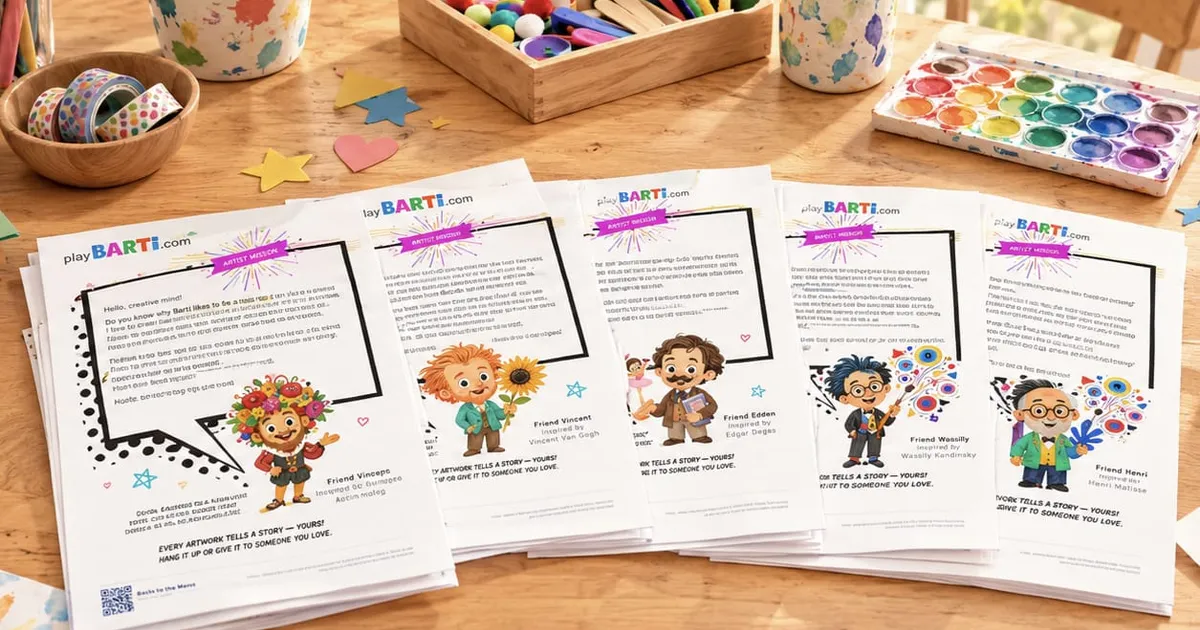
The last week of the autumn term is a strange one. Assessments are in, the nativity has been performed, Christmas jumper day has come and gone, and the timetable is full of rehearsals, parties and assemblies. Starting anything new feels pointless, yet a lesson with no plan tends to end in chaos. Here are the questions primary teachers ask most about these last few days, with answers drawn from more than ten years of running art workshops with over 3,000 children.
A class that's already on holiday
Why are children so unsettled at the end of the Christmas term?
Because everything around them has changed pace. Routines slip, there are performances and parties, and at home the excitement grows by the day. Children aren't less capable than in October; they're full. Asking for October levels of stillness is a losing battle. It works better to give that energy somewhere to go.
What can I do in class when the teaching is finished?
Something with a clear start, a short length and a result each child feels is their own. Clear, because nobody has patience for long instructions this week. Short, thirty to forty-five minutes, because attention runs out sooner than usual. Their own, because a child who knows the work belongs to them settles and focuses far better than one asked to copy a model.
Are Christmas crafts or open-ended art activities better for the last week?
It depends on what you want from the session. A traditional craft has a set outcome: if a child can't reach it, they feel they've failed, and often an adult ends up finishing it. An open-ended art activity has no model to copy, so thirty different results are all right. In the last week, when everyone's patience is thin, that second route saves a lot of tears.
How do I keep the class calm without a proper lesson?
With the quiet of absorbed work rather than imposed silence. When every child has something of their own to carry on with, the room turns itself down. Simple materials already on the tables, instructions read aloud once, and a time limit announced at the start all help. So does individual work: no teams, no competitions and no prizes, which this week tend to wind children up rather than settle them.
Every child included
What about children who don't celebrate Christmas?
Choose activities about winter, family, time together or the end of term rather than religious symbols. That way every child takes part fully without having to explain anything. The same goes for cards and presents: an activity for the holidays belongs to everyone; a nativity craft doesn't.
How do I manage a class with very different abilities?
With activities that have a low floor and a high ceiling. A low floor means everyone can start straight away, including children who find writing or drawing hard. A high ceiling means those who want to go further have room to, with more detail, more time or more ideas, rather than finishing in ten minutes and drifting. Open-ended activities have both by design.
What if a supply teacher is covering the last afternoon?
Leave an activity that works without you: nothing to prepare, instructions that can be read aloud, materials the class already has and a length that matches the session. We go into this in more detail in Art sub plans.
What to send home
What should I send home for the Christmas holidays?
Something that carries the class's work into the family without becoming homework. Holiday worksheets often stay in the book bag until January. A short activity to do together with parents, with no right answers, is far more likely to actually happen, and it takes a little piece of your classroom home.
Can I give every child a small present without sweets or plastic?
Yes. A printable activity in an envelope with the child's name on it costs little, is the same for every child and raises no allergy worries. We've gathered the questions about class gifts in Christmas activities for the whole family, and a class gift.
Does an end-of-term activity link to the curriculum?
It can, easily. Art and design asks children to use a range of materials creatively and to develop their own ideas. PSHE covers families, respect for differences and belonging. Spoken language asks them to listen, take turns and tell an experience in order. A well-chosen last-week activity touches all three without feeling like a lesson.
Our Christmas present for the class
For these last days we made We Are a Family!: a printable sheet of Christmas missions to do at home with the family, for every kind of family and with nothing religious in it. At the end, each family scans the QR code and creates its own one-of-a-kind family tree. With the Classroom licence you can photocopy it for your whole class, and there's a classroom page with a plan for the day you hand it out.
Who is Barti?
Barti is a collection of printable art missions for children, built on more than ten years of in-person art workshops with over 3,000 children. Every mission gives a starting point, never a model to copy, and works at home or in class with everyday materials.
We Are a Family! The Christmas missions
Four missions to do together at home, for every kind of family. And at the end, your one-of-a-kind family tree.
See the Christmas missionsPrintable PDF, works in black and white. With the Classroom licence, for your whole class.